
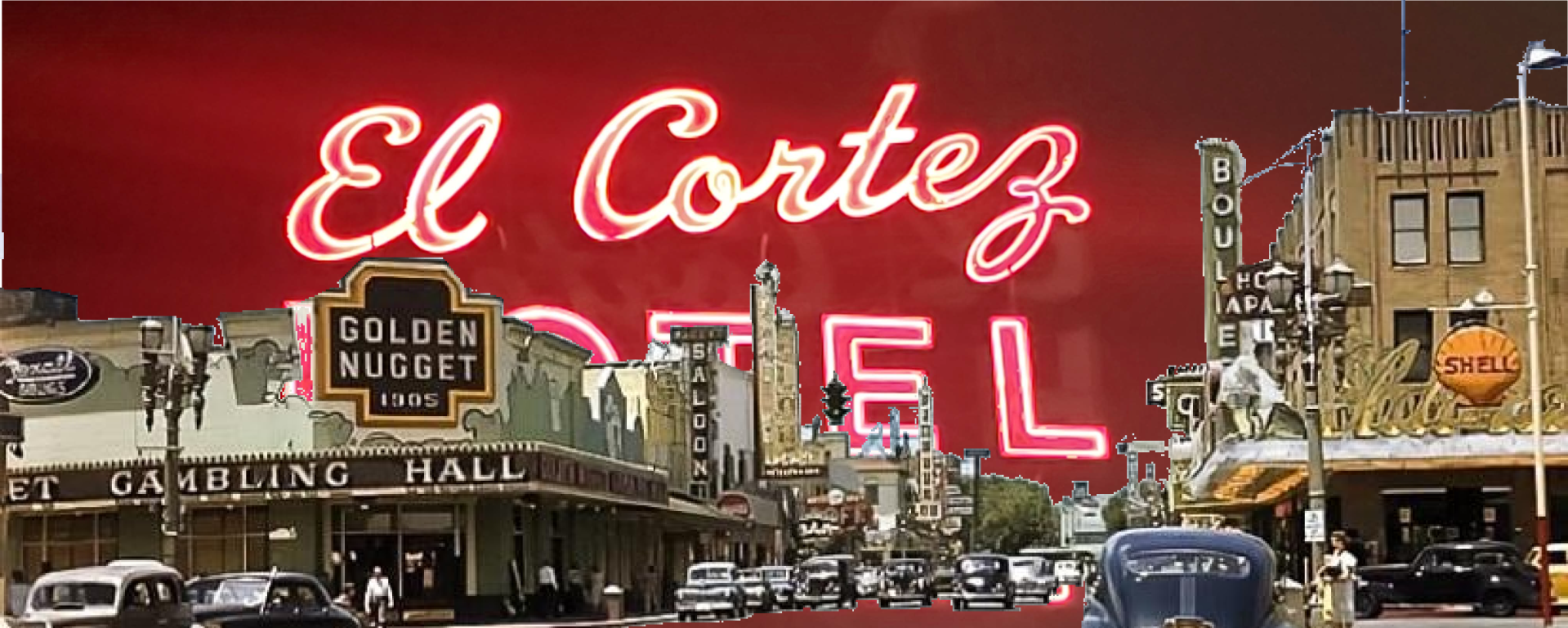
By 1947, Fremont Street was beginning to hum with a different kind of electricity. The mob’s fingerprints were everywhere, but the town itself was still small enough that everyone knew the bartender’s name — and probably what he owed in poker losses. The desert wind carried the smell of dust, diesel, and perfume. From above, the street must have looked like a glowing fuse, inching toward detonation.
The El Cortez marquee blinked steadily in the distance, anchoring the east end of downtown. A few blocks west stood The Golden Nugget, the new kid on the block, its gold façade promising a taste of the good life. Around them, the rest of Fremont was a collage of neon and noise — pawn shops, cocktail lounges, and small-time gambling joints with names like the Las Vegas Club and the Northern Club.
The tourists came trickling in, many of them driving west from Los Angeles, curious about this outlaw outpost in the sand. They were greeted by dealers in cowboy hats, waitresses with practiced smiles, and a sense that anything might happen before dawn. The casinos stayed open all night, and so did the churches — though one of them offered slot machines in the basement.
Even then, Fremont Street wasn’t just a place to gamble. It was a stage. Everyone who walked it — the hustlers, the honeymooners, the showgirls, the cops — played a part in a drama that hadn’t yet been named.
And at its far end, the El Cortez kept watch. It wasn’t the biggest or the flashiest, but it had something the others didn’t — continuity. The mob might come and go, fortunes might shift, but the El Cortez would remain a constant, flickering quietly while the city learned how to roar.

