
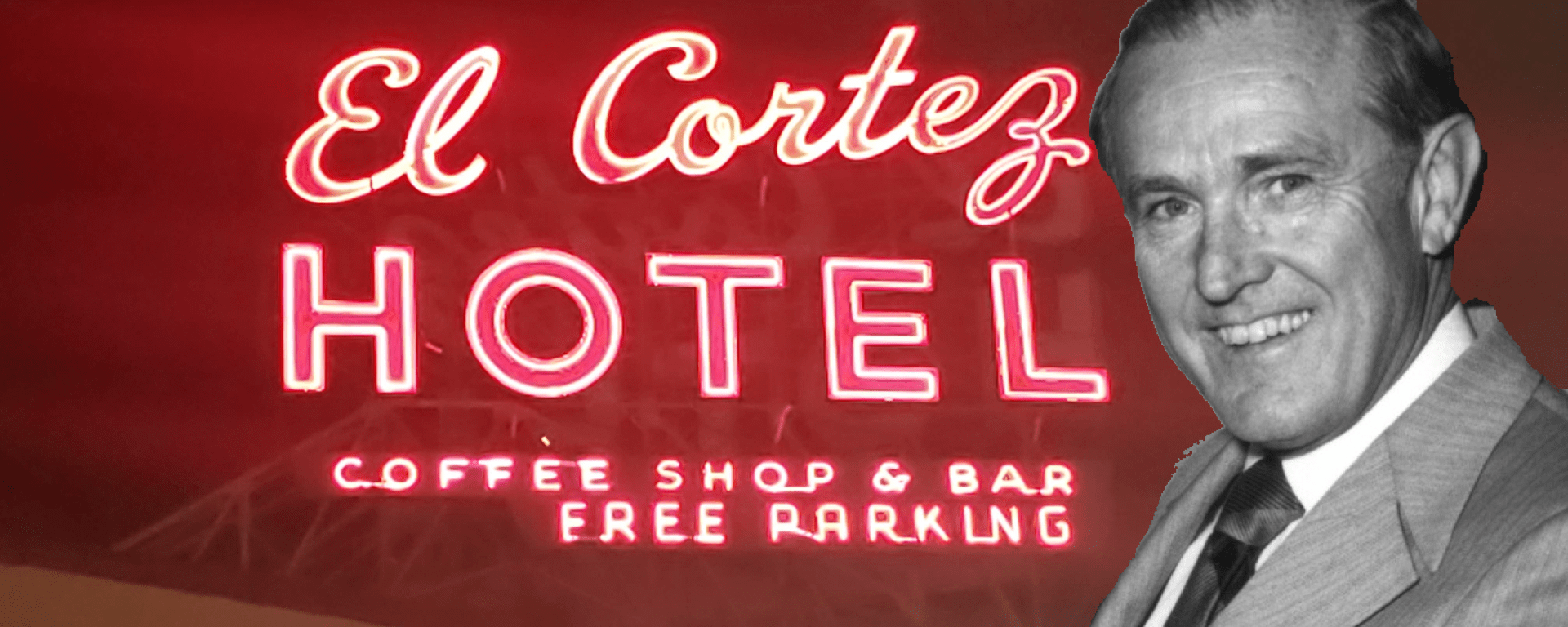
Chapter 4 of our El Cortez Spotlight series
When Jackie Gaughan arrived in Las Vegas in the early 1960s, Fremont Street was a street caught between memory and ambition. The Strip was rising fast to the south, promising fountains, fountains, and even more fountains, but downtown remained the beating heart of the city’s older rhythm. The El Cortez, already decades old, was quietly waiting for someone who would understand what it meant to manage not just a casino but a community.
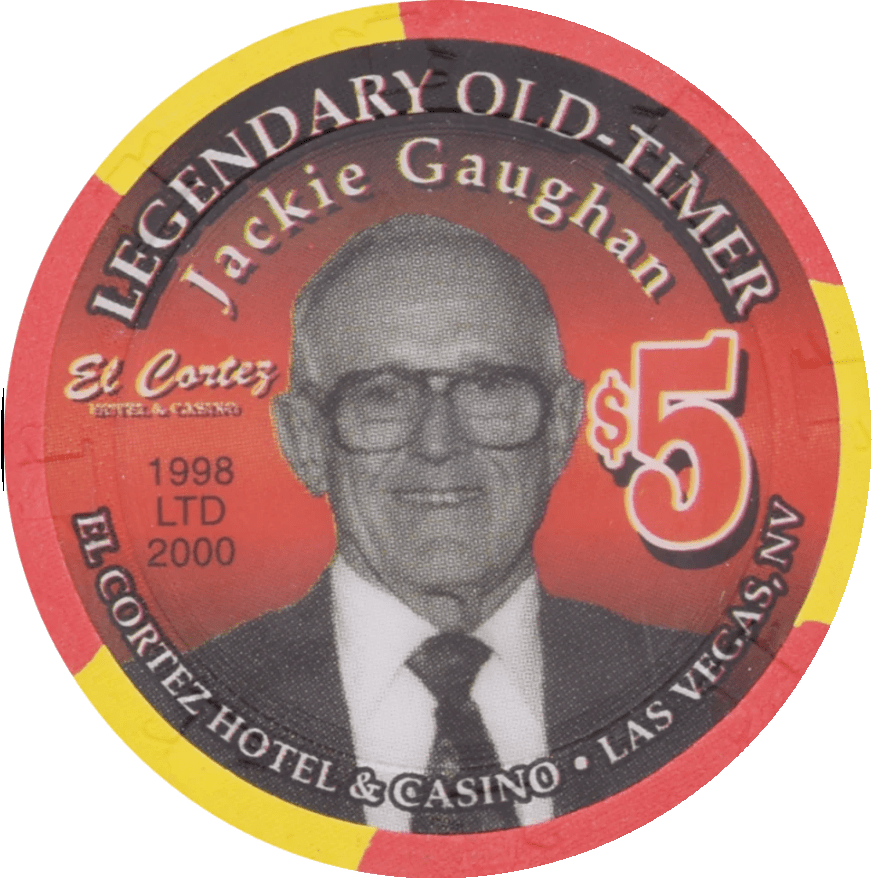
Gaughan did. He wasn’t flashy, and he wasn’t loud. He drove a modest car, wore simple suits, and greeted everyone by name. He had a knack for remembering birthdays, debts, and the quirks of long-term employees. To locals, he wasn’t just the owner — he was the mayor, the counselor, and occasionally the confessor of downtown Vegas.
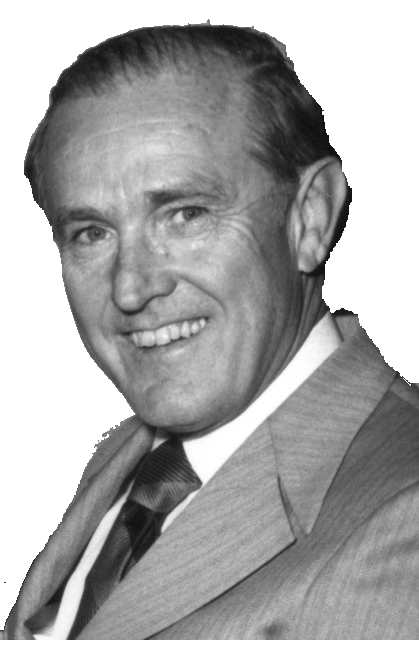
By 1963, Gaughan had acquired El Cortez and a handful of other downtown properties, including Las Vegas Club and the Gold Spike. His empire was quiet but comprehensive. Unlike the mob, he operated openly, shook hands, and never relied on fear to enforce compliance.
He had a philosophy — people mattered more than the house edge. If a gambler had a bad streak, he would sometimes comp a meal or a room. If an employee had a family emergency, he would make sure their shift was covered. And if someone tried to cheat, he handled it with a directness that required no police intervention. It was a different kind of control — subtle, humane, effective.
Under Gaughan, El Cortez remained modest but thrived. The lobby stayed small, the carpet stayed familiar, and the tables continued to hum with the same steady rhythm that had survived Bugsy’s brief tenure. Tourists came for authenticity, locals came for loyalty, and everyone felt seen.
Fremont Street itself began to change around him. Signs flickered brighter, neon animated stories along the canopy, and new casinos rose and fell like waves. Yet Gaughan’s holdings remained anchors in a shifting downtown sea. He had a knack for acquiring properties at the right moment — when the owners were willing to sell but before the market exploded. He became the quiet force ensuring that downtown never completely succumbed to the Strip’s spectacle.
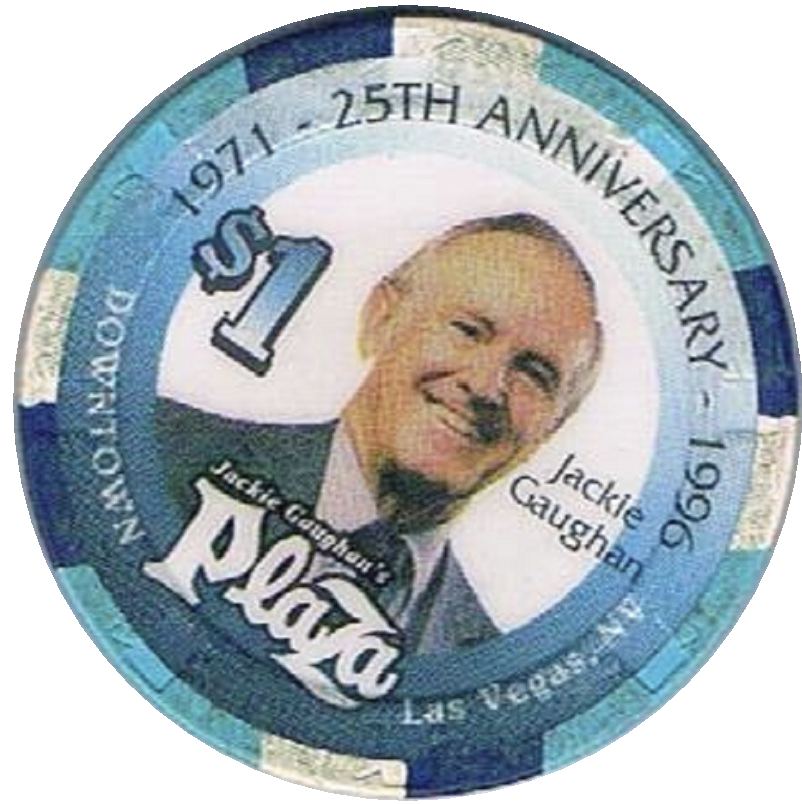
The real genius of Gaughan’s reign was not in expansion but in preservation. El Cortez became a museum in motion — a place that kept the city’s memory intact without ever feeling like a relic. Regulars who had played under the mob saw the same tables, walked the same floors, and nodded at familiar dealers. Meanwhile, new generations discovered the charm of analog Vegas: coins clinking in slot machines, cards shuffling by hand, a sense of permanence in a city built on reinvention.
Jackie Gaughan ruled not by fear or flash but by understanding the magic of consistency. Under his stewardship, downtown Las Vegas became more than a stopover — it became a community, a network of stories, a place where the past and present existed side by side. And at the center of it all, El Cortez continued to glow, quietly defiant, a reminder that Vegas had more than one kind of empire.
Other Links:

