
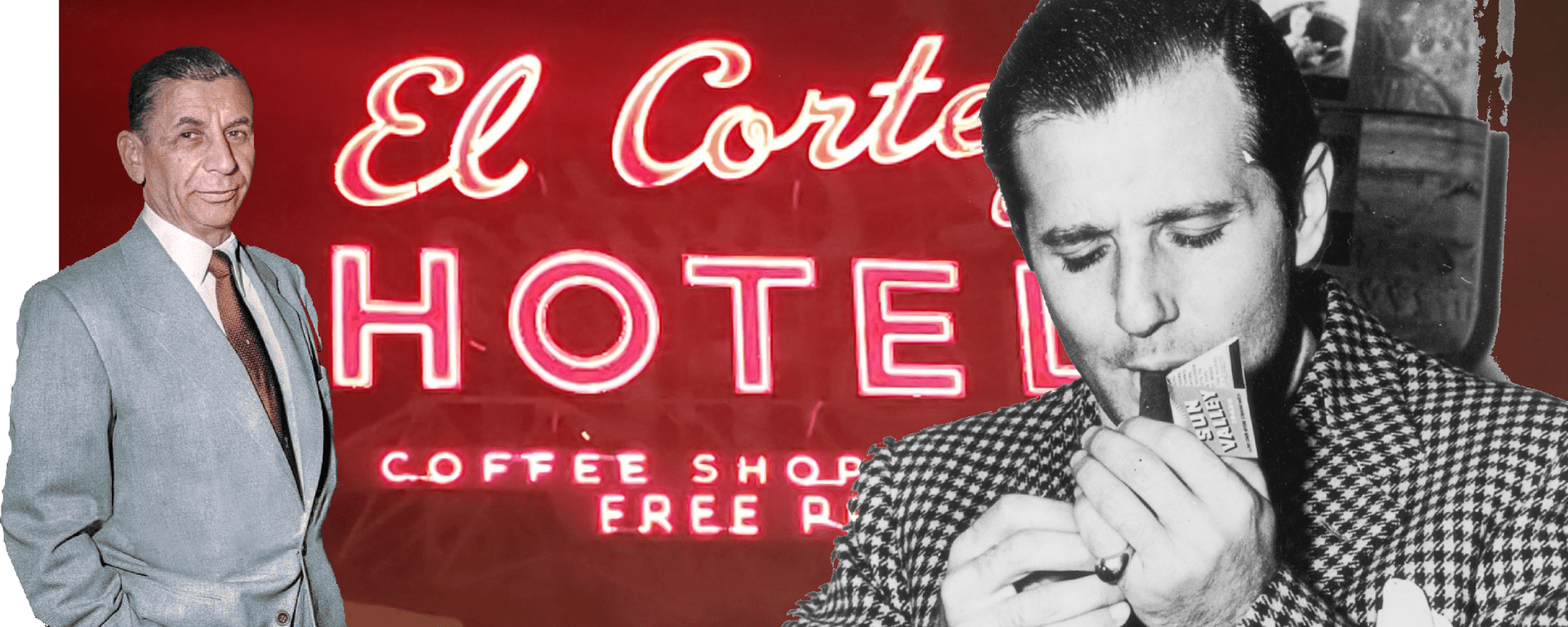
Chapter 3 of our El Cortez Spotlight series
By the mid-1940s, El Cortez had become a tidy little cash machine on Fremont Street, attracting both curious travelers and the kind of men who didn’t like to explain where their money came from. The war had ended, soldiers were returning home, and Las Vegas was poised for a kind of rebirth -one that would shimmer under neon light but grow from darker soil.
Across the desert, a new kind of businessman was taking an interest in this unlikely town. Benjamin “Bugsy” Siegel, a suave New Yorker with movie-star looks and a hair-trigger temper, was already sniffing around Nevada, drawn by its loose laws and looser accounting. When he caught wind of El Cortez’s steady profits, he saw not a small hotel-casino but a foothold -the perfect testing ground for something grander.
Siegel wasn’t alone. His partner, Meyer Lansky, preferred to stay in the background, orchestrating the finances from afar, while Gus Greenbaum and Moe Sedway kept their hands on the local pulse. Together, they approached El Cortez’s original owners with an offer that couldn’t be refused: $600,000, cash on the barrelhead. The deal was done in 1945. Overnight, the property passed from a handful of local dreamers to the most efficient criminal syndicate America had ever known.
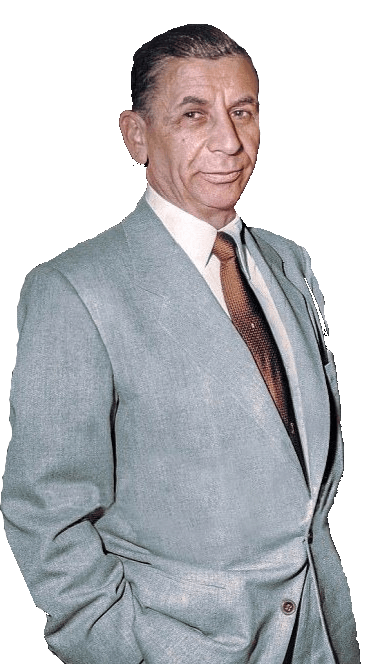
For a brief, brilliant moment, El Cortez became the unofficial nerve center of organized gambling in Las Vegas. The new owners weren’t just after profits -they were experimenting. They used the casino as a prototype, testing operational systems, staff loyalty, and security protocols that would later be replicated on a much larger scale down Highway 91. That stretch of road would soon become the Las Vegas Strip, and Siegel would become synonymous with its most infamous jewel –The Flamingo.
But while The Flamingo became Siegel’s obsession, El Cortez remained the mob’s classroom. The operation ran smoothly, quietly, and most importantly, lucratively. Fremont Street was still just a few blocks of blinking lights and dusty pavement, but inside El Cortez, the games ran like clockwork, the dealers smiled on cue, and the cash flowed north to Chicago and New York, one briefcase at a time.
In hindsight, the mob’s time at El Cortez was short -barely two years -but its impact lasted decades. When Siegel shifted his focus south to the desert beyond city limits, he took with him the lessons he’d learned under the soft glow of the El Cortez marquee: how to charm investors, how to manage skimming, and how to keep the cops just happy enough to stay away.
The casino would soon pass back into local hands, but the mob’s fingerprints would linger. In a sense, El Cortez became the DNA of modern Las Vegas -small, ambitious, a little bit crooked, and eternally chasing the next big thing.

