
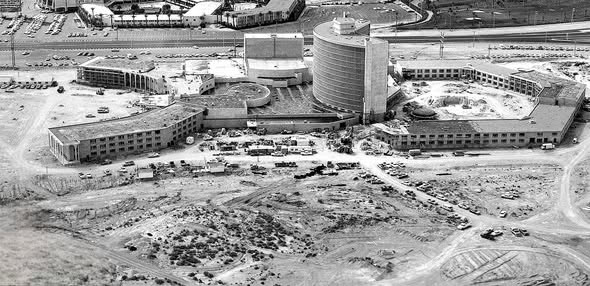
(from The House of Caesars: Power, Glamour, and the Empire of Las Vegas)
Chapter 1 in our Caesars Palace spotlight series
Las Vegas was still small enough in 1966 that a man could stand in the desert at night and hear nothing but his own pulse. The lights of the Strip stopped abruptly then—ending not in sprawl but in silence. And at the edge of that silence, amid the reek of asphalt and ambition, a stocky man from Georgia stood in a toga.
His name was Jay Sarno, and the toga wasn’t a joke. He’d had it made specially for the occasion—a thick, heavy drape of white linen that kept slipping off his shoulder as he directed a crew of electricians into position beneath the half-finished archway. The sign above them glowed with only half its intended letters: CAES— flickering and sputtering like a dying neon sun. The rest, he promised, would work by morning.
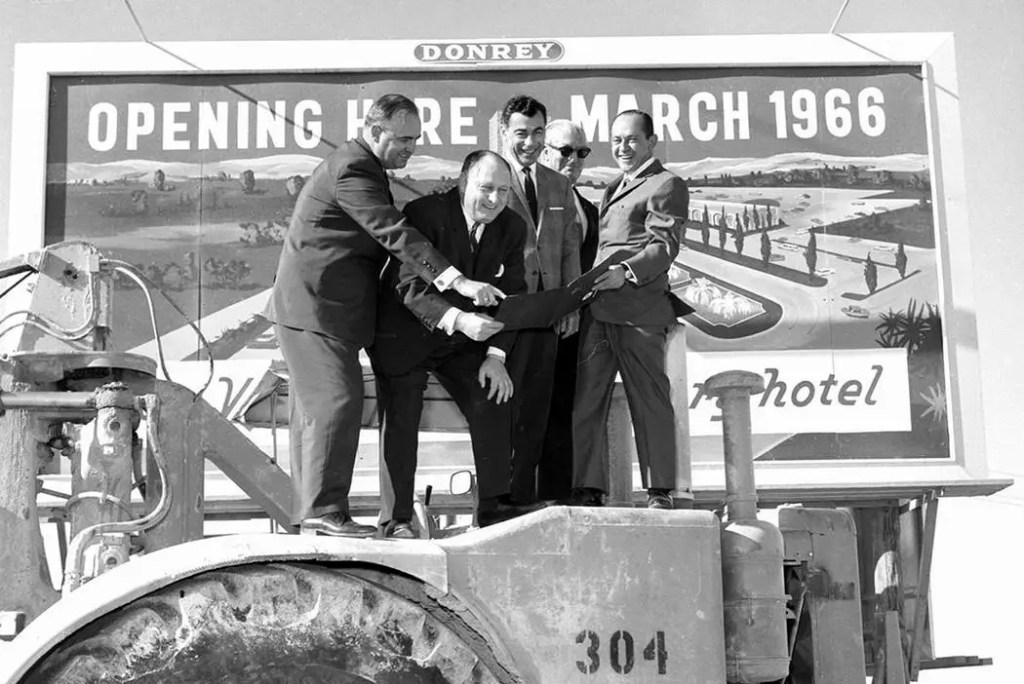
The grand opening was in forty-eight hours. Frank Sinatra was flying in. Andy Williams had sent flowers. The Los Angeles Times had already called it “a Roman holiday of the imagination.” And Sarno, who had mortgaged his sanity and borrowed millions from Jimmy Hoffa’s Teamsters pension fund, had no time for failure.
He looked up at the unfinished facade and saw not columns and plaster but marble temples and emperors. To Sarno, the Strip wasn’t a row of casinos—it was a stage. And every man who walked through those doors, from the blackjack dealer to the high-roller from Chicago, deserved to feel like a god for one night.
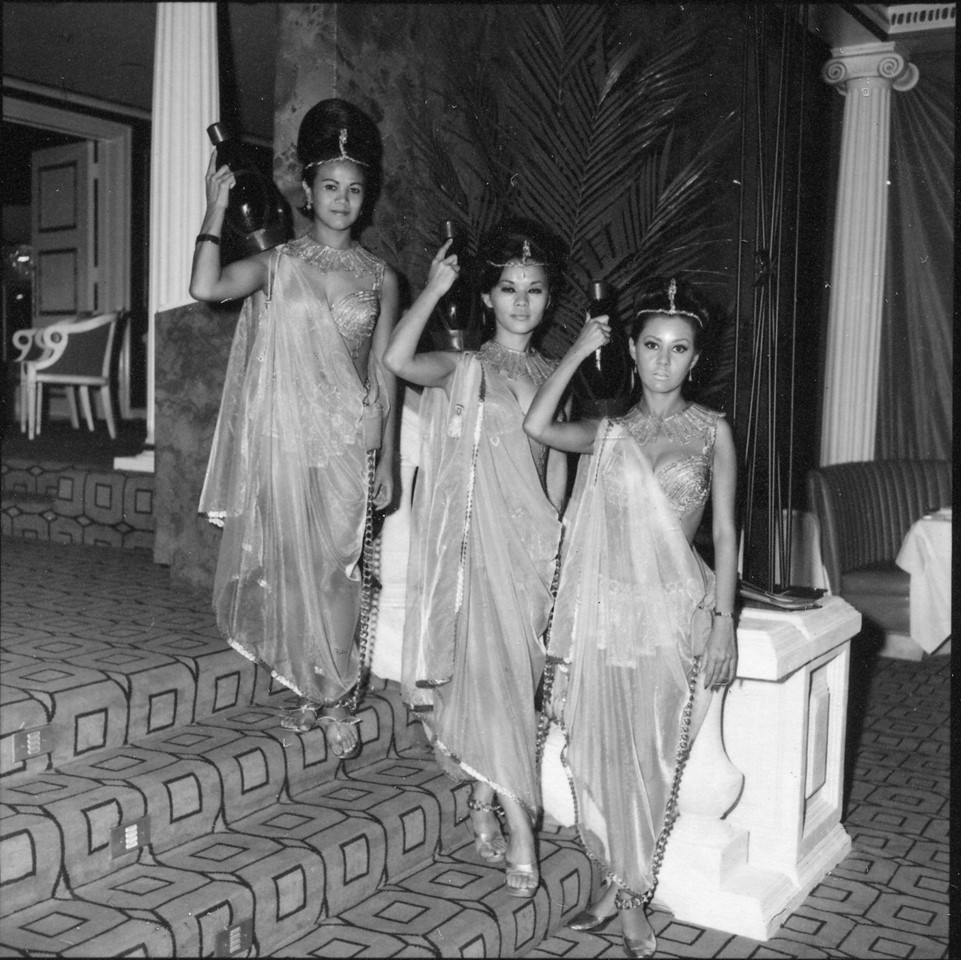
The Caesars Palace that opened that August was something no one had seen before: part movie set, part fever dream. Guests arrived through a driveway lined with imported cypress trees, greeted by women dressed as Vestal Virgins and bellmen in gold laurel wreaths. Marble fountains spouted water dyed the faintest shade of aquamarine—“Mediterranean chic,” the designers called it—and the waiters, trained by Sarno himself, were instructed to address guests as “Your Majesty.”
The city laughed at him at first. The Sahara and the Flamingo had been built by mobsters, run by gamblers, and decorated by people who thought palm trees counted as style. Sarno’s vision was different. He wanted a mythology, a place that sold not sin but spectacle. If you couldn’t go to Rome, he figured, Rome could come to you—and bring a cocktail waitress with it.
On opening night, the temperature reached 108 degrees. The champagne was warm, the fountains overflowed, and half the light bulbs in the colonnade shorted out before midnight. Sinatra strolled through the casino floor, trailed by photographers, while Jay Sarno hovered nearby in his toga, his face slick with sweat and triumph.
By dawn, the gamblers had stayed. So had the journalists. The house had made money. And as Sarno finally collapsed into a marble tub in one of his new suites, someone knocked on the door with the night’s take—a small mountain of chips in a silver tray.
He laughed then, the way gamblers laugh when they’ve gotten away with something they shouldn’t have. The desert outside was still dark. But the Strip, for the first time, glowed like a city that had no intention of sleeping.
Caesars Palace had arrived—and Las Vegas would never again be small enough for silence.

