
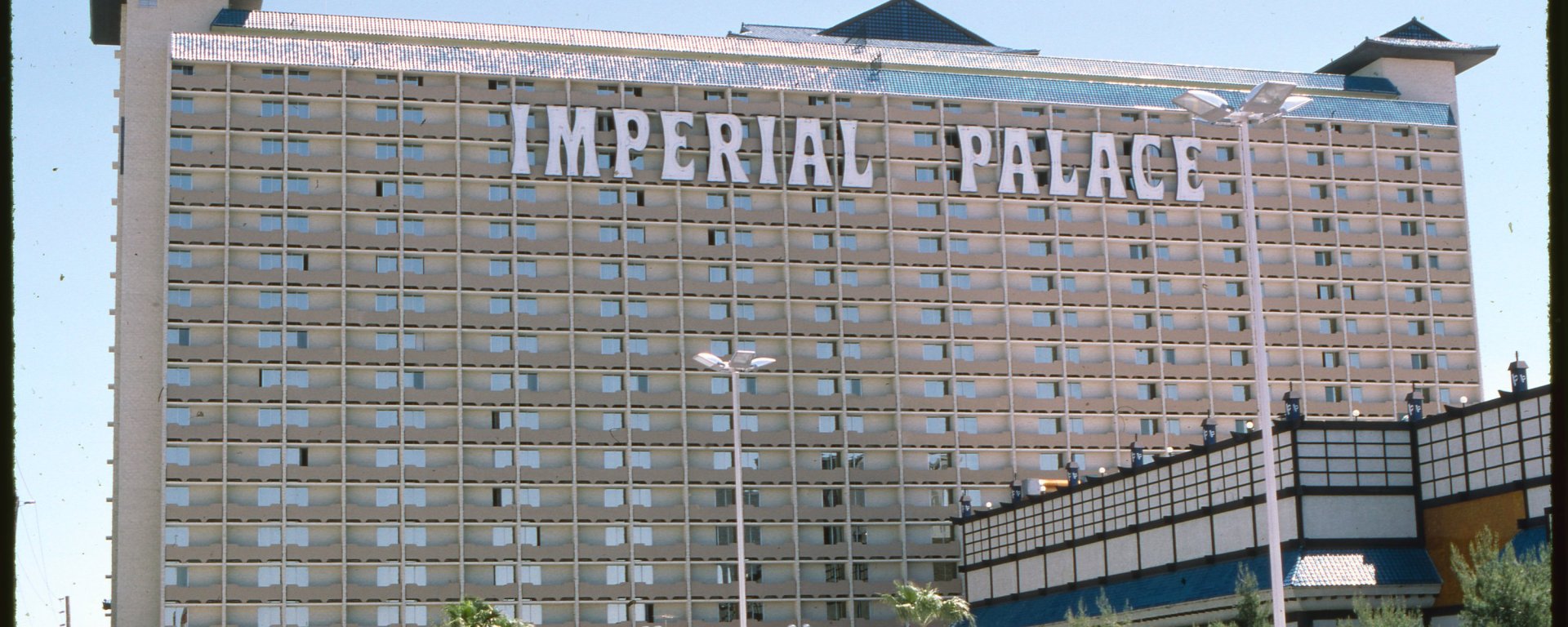
A Strip Icon with Many Lives
The Imperial Palace Hotel & Casino opened its doors on November 1, 1979, marking a bold new era along the Las Vegas Strip. But its story actually begins with a more modest hotel: the Flamingo Capri. Built in 1959, Flamingo Capri was a 180-room motel just north of the original Flamingo Hotel & Casino. In 1971, business-man Ralph Engelstad purchased the property, added a casino in 1972, and over the next several years built up motel towers. By 1979, he re-branded the site as “Imperial Palace”, embracing an Asian-palace theme with pagoda roofs, dragons and blue tile roofs imported from Japan.
Rise to Prominence
Once rebranded, the property embarked on an expansion spree. Between 1982 and 1987, Engelstad added multiple hotel towers and additional casino space, boosting room count to about 2,637.
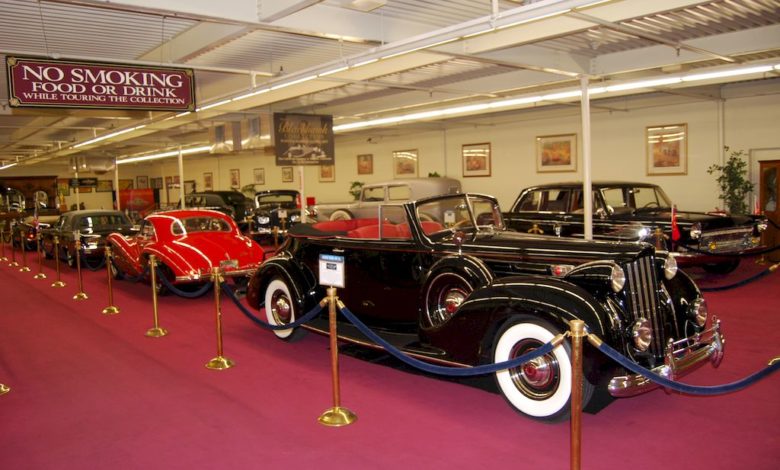
Its theme was unusual at the time, capturing visitors with value-oriented room rates and a unique look compared to the mega-resorts. The resort also introduced interesting attractions – notably the large car museum known as “The Auto Collections”, which opened in 1981.
Complexities & Controversy
As is often the case with Las Vegas developments, the Imperial Palace’s story is not without its bumps. In the late 1980s the resort’s owner Engelstad came under fire for a personal collection of Nazi memorabilia, including a “war room” and events tied to Hitler’s birthday, which led to a $1.5 million fine from the Nevada gaming regulators. There’s also a persistent myth that the hotel’s layout resembled a swastika – which aerial photos and official sources dispute, though the myth remains part of the lore.
Change of Hands & Rebranding
In 2005, the global gaming-resort company Caesars Entertainment Corporation (via its subsidiary) purchased the Imperial Palace for $370 million. By 2012 the decision was made to radically re-imagine the property. On December 21, 2012, the Imperial Palace officially closed under that name and was renamed The Quad Resort & Casino, marking a shift away from the Asian-palace theme and targeting younger visitors. Then in 2014 it transformed once more into the The LINQ Hotel & Casino, anchored by the outdoor LINQ Promenade shopping and dining district and the High Roller observation wheel.
What It Meant (and Means)
The Imperial Palace stands as a snapshot of how Las Vegas evolves. It began as a value-oriented resort with a bold, themed aesthetic, and eventually was absorbed into the juggernaut of corporate branding and redevelopment.
Its legacy includes:
- A reminder that smaller or mid-tier resorts often targeted niche clientele (in this case value-focused, and at times Asian-themed) rather than ultra-luxury.
- A case study in how atypical themes (dragons, pagoda roofs) marked the 1970s-80s era of themed resorts.
- A cautionary tale of how ownership controversies can colour a resort’s history.
- An illustration of how the Strip sought to modernize in the 2010s, shifting toward mixed-use, entertainment-district style experiences rather than just hotel/casino combos.
While the name “Imperial Palace Hotel & Casino” no longer appears on the Strip, the bones of the resort remain, reborn as The LINQ. For anyone interested in Las Vegas history-and how resorts shift from quirky independent holdings to corporate-owned entertainment hubs-the story of the Imperial Palace is a rich chapter.
If you wander past the LINQ today, you’re walking on ground that once echoed with pagoda-inspired décor, “dealertainer” shows, the Auto Collections, and a value-oriented gaming floor bustling with middle-class tourists. In that sense, the spirit lives on even as the branding has changed.

