
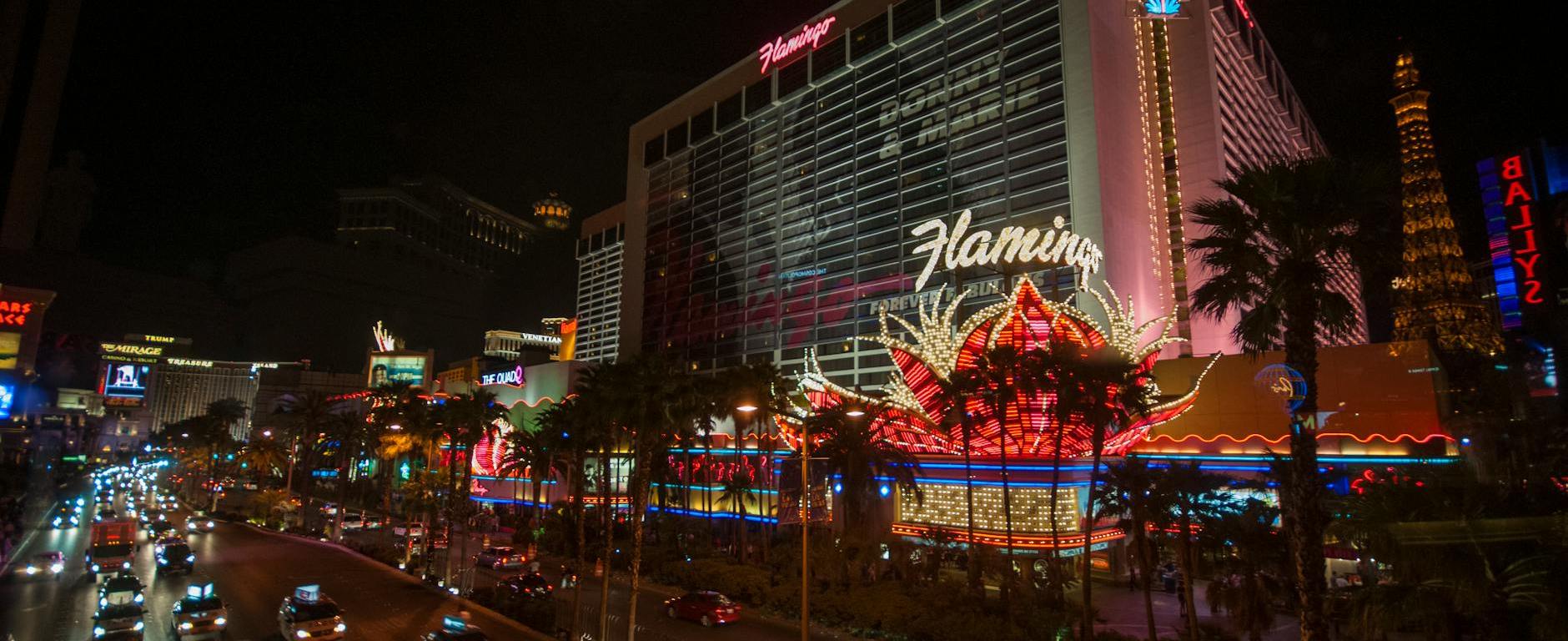
Pink Flamingos Everywhere
From neon lights to yard ornaments, the pink flamingo has become one of the most recognizable symbols in pop culture. Nowhere is this more evident than at the Flamingo Hotel and Casino, a resort that has embraced the flamingo as part of its brand identity since its earliest days. But how did this tropical bird, native to the Caribbean, South America, and Africa, become an icon of Las Vegas, mid-century Americana, and kitsch culture? The answer lies in a mix of branding genius, cultural trends, and pure Vegas flair.
Bugsy Siegel’s Vision and the Flamingo Name
The story of the flamingo as a cultural symbol in Las Vegas begins with Benjamin “Bugsy” Siegel, the notorious gangster who envisioned the Flamingo Hotel and Casino as a luxury oasis in the Nevada desert. When Siegel took control of the project in 1946, the hotel had already been under construction, but he gave it a new identity, branding it after his longtime girlfriend, Virginia Hill, who had the nickname “Flamingo” due to her long legs and fiery personality.
The Flamingo became the first luxury casino-hotel on the Las Vegas Strip, setting the standard for future resorts with its emphasis on glamour, entertainment, and high-stakes gaming. Unlike the Western and cowboy themes of earlier Nevada casinos, the Flamingo adopted a tropical aesthetic, filled with lush gardens, palm trees, and, of course, its signature pink flamingo branding. Siegel’s vision ensured that the flamingo bird became inseparable from the Las Vegas dream—a symbol of excess, paradise, and reinvention.
The Flamingo as a Pop Culture Phenomenon
As the Flamingo Hotel grew in popularity through the 1950s and 1960s, its branding became iconic. The resort’s neon flamingo signage became one of the most photographed landmarks in Las Vegas, appearing in countless films, TV shows, and advertisements. The hotel’s marketing leaned into the exotic imagery of flamingos as symbols of both luxury and playfulness.
The 1960 Rat Pack film “Ocean’s 11”, starring Frank Sinatra, Dean Martin, and Sammy Davis Jr., helped further cement the Flamingo’s cultural reputation. The resort became a favorite hangout for Hollywood stars, reinforcing its image as the playground of the rich and famous. The association between the Flamingo Hotel and celebrity status turned the flamingo itself into a symbol of wealth and good times.
Flamingos and the Rise of Kitsch Culture
By the 1960s and 1970s, the flamingo had taken on a life of its own beyond the Flamingo Hotel. As American suburbia boomed, homeowners began embracing colorful and playful lawn decorations—including plastic pink flamingos. This trend was popularized by Don Featherstone, who designed the original plastic flamingo lawn ornament in 1957 while working for Union Products.
The pink flamingo quickly became a symbol of fun, rebellion, and quirky Americana. It was embraced by the counterculture movement, with figures like John Waters—who directed the cult classic film Pink Flamingos (1972)—using the flamingo as an emblem of outrageousness and anti-establishment humor.
At the same time, Las Vegas leaned even further into the flamingo branding. The Flamingo Hotel expanded and renovated throughout the 1980s and 1990s, adding more flamingo imagery, pink neon accents, and even live flamingos to its Flamingo Wildlife Habitat, turning the bird into an inseparable part of the hotel’s identity.
Flamingos in Modern Branding and Pop Culture
Today, the flamingo continues to thrive as a cultural icon. The Flamingo Hotel and Casino, now operated by Caesars Entertainment, still prominently features the pink flamingo in its marketing and design. Visitors can stroll through the Flamingo Wildlife Habitat, where live flamingos still roam the gardens, providing an Instagram-worthy experience that keeps the flamingo’s appeal alive in the digital age.
Beyond Las Vegas, the flamingo has remained a pop culture staple in fashion, home decor, and branding. From flamingo pool floats to tropical-themed apparel, the bird’s image is synonymous with vacation vibes and retro cool.
References:
*Bugsy Siegel: The Mob Museum. Retrieved from themobmuseum.org; Ocean’s 11 and the Flamingo: TCM Classic Films. Retrieved from tcm.com; Don Featherstone and Plastic Flamingos: Smithsonian Magazine. Retrieved from smithsonianmag.com; Flamingo Hotel and Branding: Caesars Entertainment. Retrieved from caesars.com; Pop Culture and Kitsch: Neon Museum Las Vegas. Retrieved from neonmuseum.org.

