
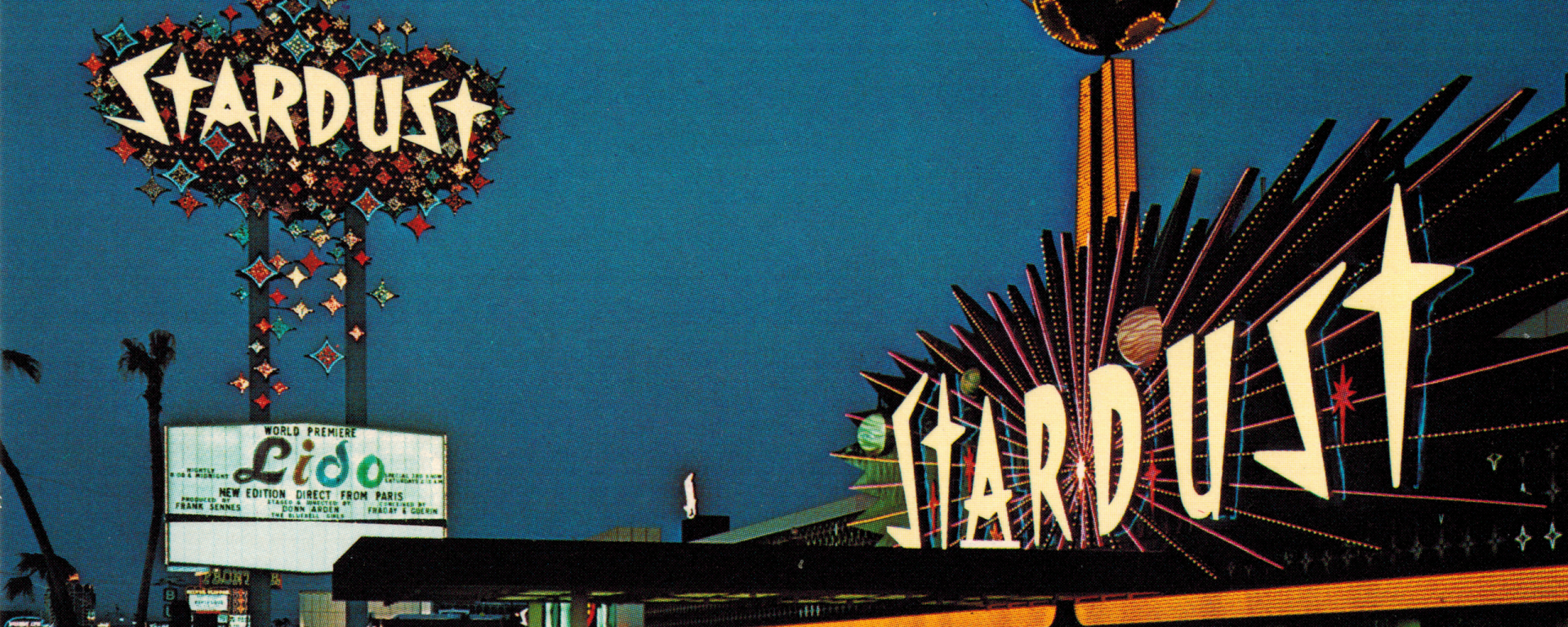
The Stardust as a Symbol of Las Vegas
For nearly half a century, the Stardust Hotel and Casino stood as an enduring emblem of the glitz, glamour, and intrigue that defined Las Vegas. From its inception in 1958 to its dramatic implosion in 2007, the Stardust wasn’t just a place to gamble, stay, or watch a show—it was an idea, a reflection of the city’s rise from a dusty desert outpost to the global entertainment capital. Its neon glow illuminated more than just the Las Vegas Strip; it lit up an entire era of ambition, reinvention, and excess.

The Stardust represented the quintessential promise of Las Vegas: the chance to be transported to another world. With its cosmic theme and groundbreaking design, the Stardust was an audacious attempt to look toward the future while capitalizing on the escapism that fueled the city’s appeal. For visitors stepping through its doors, it offered not just luxury and entertainment but an escape from the mundane. For decades, it set the standard for what a Las Vegas resort could be, constantly evolving to match the shifting tides of culture, business, and technology.
Understanding the Stardust’s role in shaping Las Vegas requires looking beyond the slot machines and lavish shows to its deeper impact on the city’s identity, economy, and allure. From its ties to organized crime to its pioneering innovations, the Stardust’s story is a microcosm of Las Vegas itself—a city built on dreams, reinvention, and unapologetic ambition.
A Neon Landmark
When the Stardust opened its doors on July 2, 1958, it was the largest hotel in the world. Its sprawling 16-story tower and 1,065 guest rooms signaled a new era for Las Vegas hospitality. Yet, it was the Stardust’s iconic sign that truly set it apart. Designed by the legendary neon artist Kermit Wayne, the sign—a 216-foot-long masterpiece of flashing lights and space-age imagery—became a beacon on the Strip. At night, its glittering facade, adorned with celestial imagery and radiant stars, was visible for miles, embodying the optimism and allure of the Atomic Age.
The Stardust’s cosmic theme resonated deeply with the cultural zeitgeist of the late 1950s. America was looking to the stars, captivated by the dawn of the Space Race. The Stardust capitalized on this fascination, presenting itself as a futuristic escape where guests could feel like they were part of a glamorous interstellar voyage. This sense of wonder and spectacle became a hallmark of Las Vegas resorts, but the Stardust was among the first to embrace such a bold and cohesive theme.
A Reflection of Las Vegas’ Identity
Throughout its history, the Stardust mirrored the evolution of Las Vegas itself. In its early years, the casino epitomized the frontier spirit of the city—a place where ambition and risk-taking were rewarded. It was a venue for high rollers, celebrities, and tourists alike, creating a melting pot of experiences that reflected the diverse allure of the Strip.
Yet, the Stardust’s story is also intertwined with the darker undercurrents of Las Vegas’ rise. During the 1960s and 1970s, the Stardust was closely linked to organized crime, serving as a hotbed for skimming operations and illicit activities. These shadowy dealings became part of the casino’s legend, cementing its reputation as a place where fortunes were made and lost, sometimes in ways that never saw the light of day. This duality—of glitz and grit—defined not just the Stardust but Las Vegas as a whole.

As the decades passed, the Stardust adapted to the changing landscape of the Strip. In the 1980s, its acquisition by Boyd Gaming marked a shift toward corporate ownership, reflecting the broader transformation of Las Vegas from a mob-controlled haven to a legitimate business enterprise. Despite these changes, the Stardust retained its unique charm, becoming a nostalgic symbol for those who remembered the city’s golden age.
An Enduring Legacy
When the Stardust was demolished in 2007 to make way for the ambitious but ultimately unrealized Echelon Place project, it marked the end of an era. The implosion of the Stardust’s towers was more than just the destruction of a building; it was a symbolic farewell to a bygone Las Vegas. Yet, the Stardust’s legacy endures. Its spirit lives on in the design of modern resorts, the city’s embrace of spectacle, and the memories of those who experienced its magic firsthand.
The Stardust’s story is one of ambition, resilience, and reinvention—qualities that define both Las Vegas and the people who built it. As you journey through the history of this iconic casino, you will uncover the fascinating tales, larger-than-life personalities, and pivotal moments that made the Stardust not just a hotel, but a legend. Its lights may be dimmed, but its place in the history of Las Vegas will forever shine brightly.

