
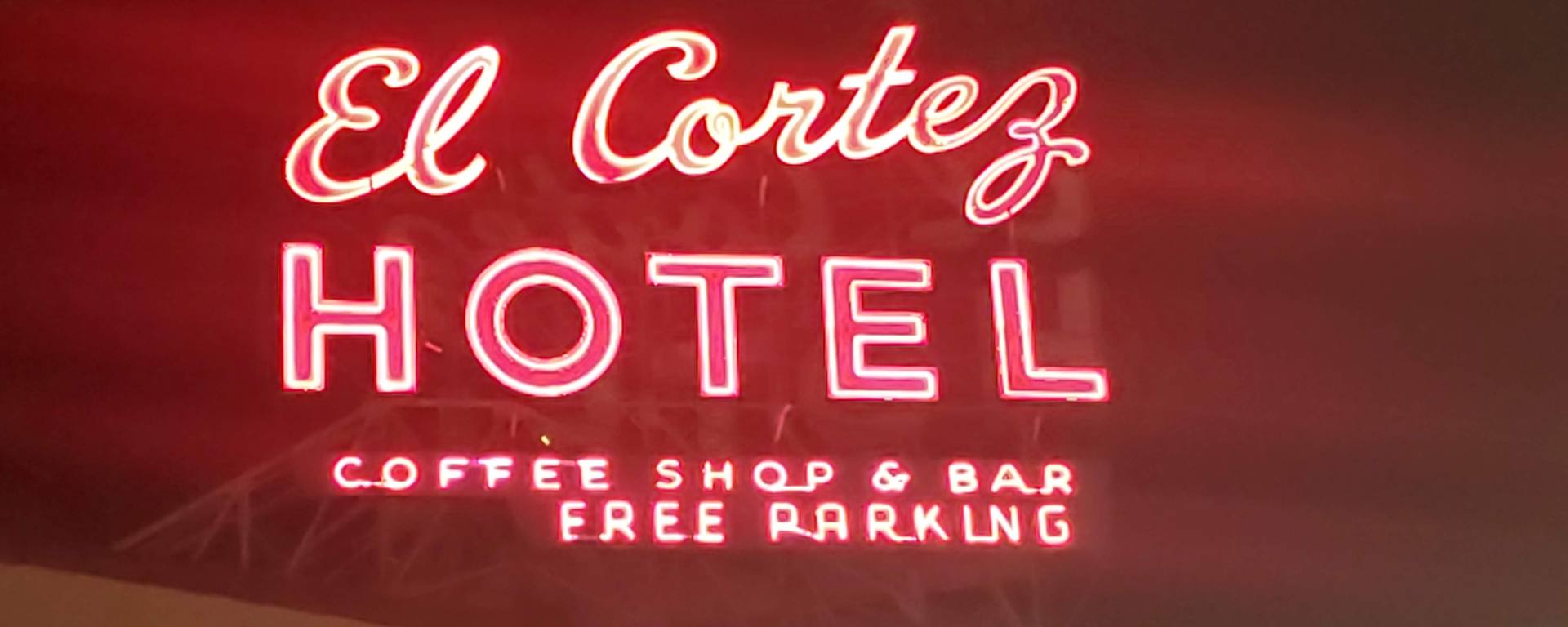
There are newer casinos in Las Vegas, and there are bigger ones, flashier ones, ones with Italian fountains and synchronized volcanoes. But there is only one El Cortez =and it smells like nothing else on earth.
Step through the glass doors on Fremont Street and you enter a small tornado of perfumes: the faint metallic whiff of old coins, a drift of disinfectant, the sweetness of someone’s cigarette three rooms away, and that undertone = warm dust baked into carpet=so particular that locals swear they could recognize it blindfolded. It is the smell of history rendered in HVAC.
At the roulette table, a woman in her seventies in a sequined cardigan is teaching a man half her age to “never bet the middle.” The dealer nods politely. A young couple from Portland are taking pictures of the vintage slot machines, marveling that the coins come out in real clinks, not on a digital screen. The cocktail server glides past with the reflexes of a dancer, balancing gin and tonics in a room that has seen more secrets than some entire states.
El Cortez does not try to be young. Its wooden floors creak like an old ship, its neon is sun-faded at the corners, and its carpeting has outlived several generations of optimism. And yet, somehow, it still feels alive — defiantly so. The casino opened in 1941, when “downtown” was the only town, and Fremont Street was just a paved stretch of desert ambition. Eighty-four years later, the Strip has risen and metastasized fifteen minutes to the south, and downtown has become its dreamlike echo — the part of Vegas that remembers what Vegas used to mean.
The locals call El Cortez “the last honest casino.” They mean it half-jokingly. But there’s something in the way the blackjack dealers shuffle =steady, unhurried, almost ceremonial =that makes the phrase stick. Here, the odds feel tangible. You win or you lose, but you see it happen. The city’s billion-dollar resorts might boast about their high-tech surveillance, their Michelin-starred chefs, their wellness spas that cost more than a house. El Cortez boasts a breakfast special and the kind of eye contact that once built an empire.
On certain mornings, when the light from the Fremont canopy filters through the tinted windows, you can almost see the ghosts moving between the tables. Not literal ones—though the staff will insist they’ve seen those too=but the figurative kind: the ghosts of Bugsy Siegel and Meyer Lansky, who owned this place briefly before deciding the desert was big enough for something more flamboyant. They sold it to Jackie Gaughan, who ran it for half a century and lived upstairs, like a caretaker in a museum of risk. Gaughan’s office was small and unpretentious, his door always open. He gave Christmas bonuses in cash, shook every employee’s hand, and ate dinner at the same booth every night until he couldn’t.
He was, by all accounts, the rarest kind of Vegas figure — a man without enemies.
Outside, Fremont Street has gone through its own costume changes. The street once lined with neon cowboy signs and pawn shops now has artisan doughnut stalls and NFT galleries. Buskers dress like Elvis or Pikachu. Yet, in the middle of it all, the El Cortez stands like a polite elder at a rave =bemused, composed, quietly enduring.
If Las Vegas is a city built on erasure, El Cortez is a city built on memory. It remembers the first dice rolled before the war, the first neon flicker, the first time someone thought a casino could feel like a family business. It remembers when the mob still tipped well and when dealers wore bow ties because it made them look respectable.
The people who love El Cortez don’t come for luck. They come because it’s one of the few places where time slows down. The waitress who’s worked there since 1988 will still call you “honey.” The bellhop knows which guests want a high floor because they remember when that meant quiet. The regulars at the bar argue about the merits of nickel slots versus penny ones like theologians parsing the Book of Job.
On the wall near the cashier’s cage hangs a black-and-white photo of the building from the 1940s. The sign looks nearly the same. The photo itself, yellowed at the corners, feels like a warning against the city’s favorite sin: forgetting.
“People think Vegas doesn’t have history,” a longtime manager once told me, leaning on the counter as if guarding a secret. “They just don’t know where to look.” He nodded toward the spinning wheel, the chime of coins, the faint perfume of a past that refuses to leave.
In that sense, El Cortez isn’t just a casino. It’s a contradiction that survived =a place where the ghosts pay rent on time, where nostalgia is currency, and where the house still wins, but at least it wins politely.

