
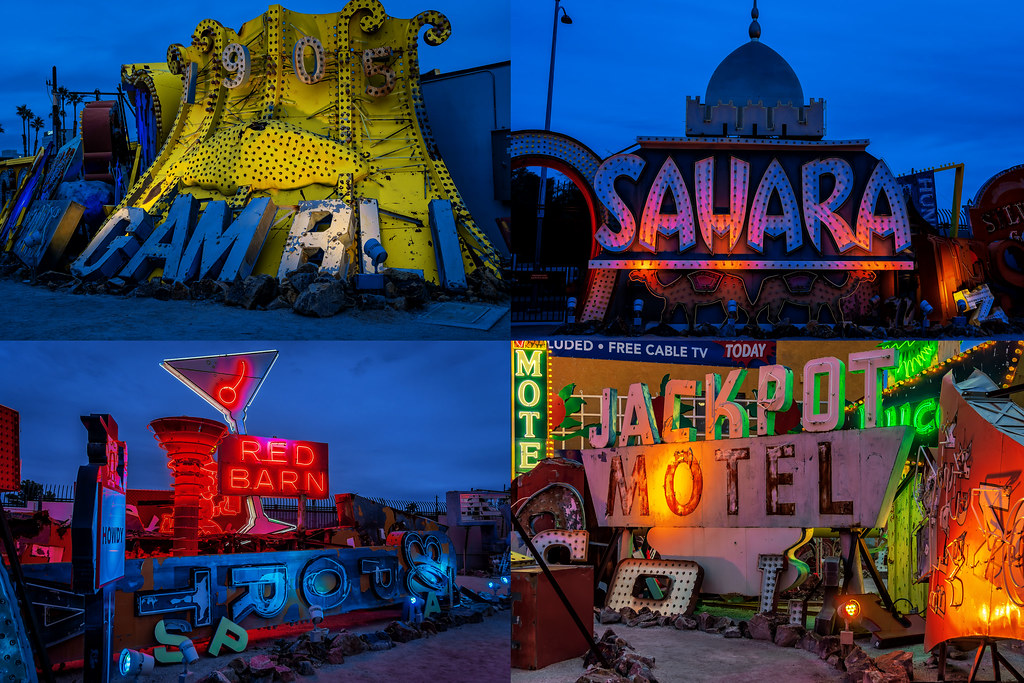
The Neon Museum: Where the Soul of Las Vegas Finds Its Glow
In the vibrant heart of Las Vegas, amid the dazzling lights and ceaseless extravagance, lies an exceptional haven for the city’s cultural heritage—the Neon Museum. This unique institution, nestled in the neon-lit streets of Las Vegas, Nevada, is not your typical museum. Instead of paintings and sculptures adorning its walls, it proudly showcases the remnants of a bygone era—the iconic neon signs that once adorned old casinos and businesses, resurrected and displayed in the open air across 2.62 acres of desert landscape.
It is here, on this hallowed ground, where visitors can witness the neon-lit history of a city built on dreams, excess, and a relentless pursuit of spectacle. The Neon Museum is a testament to the city’s flamboyant past, each sign a testament to the creators, the dreams they represented, and the stories they told. It’s more than just a museum; it’s a time machine, a bridge to Las Vegas’s roots, where neon lights first began to illuminate the desert night.
The Neon Museum’s journey began in 1996 when it emerged as a partnership between the Allied Arts Council of Southern Nevada and the City of Las Vegas. Over the years, it has blossomed into an independent 501(c)3 non-profit institution. The seeds of this venture were sown with the loss of the iconic sign from The Sands, replaced by a newer version in the 1980s. The absence of a storage facility for this massive icon eventually led to its dismantling.
This void created an urgent need for a repository for the neon signs that had once adorned Las Vegas’s skyline. After almost a decade of passionate collection efforts, the Allied Arts Council and the city of Las Vegas joined forces to create an institution that would preserve and care for these remarkable artifacts. In November 1996, the Neon Museum marked its official opening by restoring and placing the Hacienda Horse & Rider sign at the crossroads of Las Vegas Boulevard and Fremont Street.
At the time, access to the Neon Museum’s collection was provided by appointment only. The collection had already begun to tell the story of Las Vegas, but it was clear that a broader audience deserved the chance to be part of this journey. The next significant step came in 2005 when the historic La Concha lobby, an architectural marvel, was donated to the museum. The Doumani family’s generosity allowed this lobby to be moved and restored, setting the wheels in motion for the creation of a proper visitors’ center and the expansion of the museum’s footprint. This ambitious endeavor raised approximately $6.5 million through public and private grants and donations.
The painstaking process of relocating and reassembling the La Concha lobby—cut into eight pieces and transported 3.5 miles north along Las Vegas Boulevard—was a testament to the dedication of those who believed in preserving the neon history of this extraordinary city. This commitment culminated in the restoration and installation of the iconic Silver Slipper sign, a beloved symbol of Las Vegas’s bygone glamour.
A significant turning point came in October 2012 when the Neon Museum welcomed visitors with paid public admission, replacing its former appointment-only policy. The response was nothing short of spectacular, with the first year drawing in 60,461 visitors, exceeding initial estimates. This remarkable influx of enthusiasm was a testament to the Neon Museum’s enduring appeal.
As the Neon Museum continued to grow and evolve, it outgrew its former space in the La Concha lobby shell. In 2016, it moved its headquarters to the old City Hall, where the former offices were transformed into a museum store. In 2017, the museum marked its fifth anniversary with free admission, a gesture of gratitude to the community that had embraced its mission.
In 2018, the Neon Museum reached a new milestone by introducing Brilliant!, a captivating 30-minute art installation designed by Craig Winslow. This mesmerizing display utilizes multiple projectors to reanimate defunct signs, each set to vintage and contemporary music, weaving together the past and present of Las Vegas’s neon-lit story.
The Neon Museum is a living testament to the soul of Las Vegas. It boasts three main exhibit areas that celebrate the city’s dazzling past and promising future. The Restored Signs exhibit showcases meticulously restored neon signs along Las Vegas Boulevard, between Fremont Street and Washington Avenue. Here, you can witness these luminous artifacts shine anew, their tales of glitz and glamour given a second life.
The Neon Boneyard Park, created in 2012, is a vibrant tribute to Las Vegas’s neon legacy, with the word “NEON” spelled out in letters that echo those on signs for legendary establishments like the Golden Nugget and Caesars Palace. The Main Boneyard is where the majority of the Neon Museum’s collection resides, including signage from iconic locations like the Stardust, Riviera, Desert Inn, and Caesars Palace.
The North Gallery, inaugurated in 2018, hosts Brilliant! This innovative installation breathes life into the dormant signs, offering visitors a unique sensory experience that weaves Las Vegas’s history with its present.
The Neon Museum is not just a collection of signs; it’s an ode to Las Vegas’s story, its resilience, and its constant reinvention. The neon signs are the city’s storytellers, whispering secrets of its glamorous past while simultaneously promising a radiant future. Each neon sign is a chapter in the ever-evolving narrative of Las Vegas, where the neon lights never truly fade.
The Neon Museum stands as a beacon of art, history, and culture in the neon-soaked city of Las Vegas, reminding us that the glitz and glamour of the past remain as vibrant as ever in the desert night.

